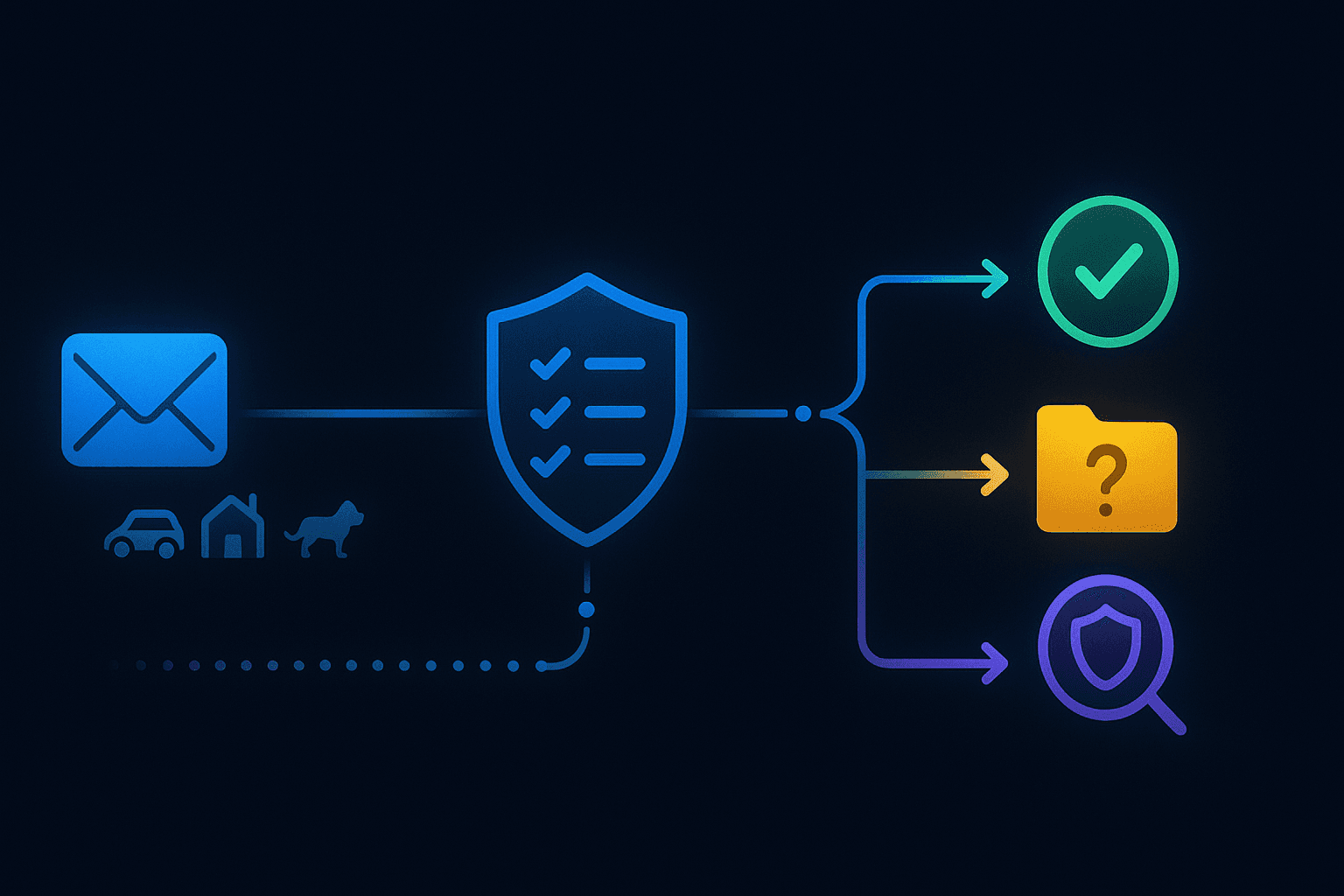
How to Coordinate Email and LinkedIn Follow-Up Without Double-Contacting Prospects
A practical control model for running email and LinkedIn follow-up from one prospect history, with clear approvals, stop rules, and reply ownership.
Blog
Strategy, architecture, and real-world patterns for teams building with AI agents.

The hard part of deploying AI agents is not choosing a model or building infrastructure. It is redesigning outcomes, ownership, handoffs, authority, and feedback around work an agent can now perform.

Relay.app winds down on August 15 (free) and September 14 (paid). What to export before it disappears, what to look for in a replacement, and how to move human-in-the-loop workflows to AgentLed.

A practical playbook for turning a narrow prospect list into more qualified email conversations without making a founder or sales lead review every routine message.

Approval makes the first production runs safe, but approving every action does not scale. The next step is bounded delegation with explicit policy, evidence, audit sampling, escalation, revocation, and a kill switch.

Most companies start with agencies, n8n, API keys, and dashboards. Expert operators build deployment loops: customer priorities, validation, dry runs, gradual rollout, monitoring, learning, client updates, and ROI evidence.

Codex can inspect, diagnose, and improve technical work. AgentLed gives it the business layer: workflows, integrations, Knowledge Graph memory, approvals, and run history. Together they turn repeated operating work into supervised business loops.

As agentic AI moves from answers to actions, the bottleneck becomes verification. Audit trails, independent AI judges, approval gates, and structured run histories are what let agents scale inside real businesses.

Satya Nadella's token capital argument is self-serving for Microsoft: if the frontier model is not the whole game, the enterprise platform becomes the battleground. But the underlying point is right: companies need owned learning loops, not rented intelligence.

Codex is strong inside the repo. AgentLed gives it the business substrate around the repo: workflows, integrations, memory, approvals, monitoring, and the portal needed to run a supervised FDE loop.

Why are Anthropic, OpenAI, and Accenture betting on Forward Deployed Engineers? See what the FDE model means for deploying AI in real businesses.

Most SaaS onboarding still assumes a human is reading the signup page. When the user is an AI coding agent, every step of that flow is friction or impossible. Six concrete shifts that come out of designing onboarding for an agent instead β one command, tools shipped with a playbook, scaffolded workspace folder, knowledge probe, agent-relayed restart, idempotent re-run.

Stanford's 2026 AI Index says 89% of enterprise AI agents never reach production. The failure isn't the model β it's the architecture. Seven concrete reasons agents break in prod, with the unit-economics math, and the structured-automation pattern (a.k.a. agentic ops) that fixes them.

Agentic CLIs are great at dev mode. Shipping to prod means integrations, caching, retries, permissions, and audit β weeks of engineering and 2β3x the token bill. Here's what the production layer contains, and what it costs to build it yourself vs. adopt one.

Automations and agents aren't competing choices β they solve different problems. Here's the practical breakdown: what each one is, where each fails alone, and the design rule for using both correctly.

The honest breakdown of what 2,000 Pro credits buys, real usage examples across enrichment, AI analysis, and scraping workflows, and when to upgrade to Teams or Enterprise.

Vector databases retrieve similar content. Knowledge graphs store structured relationships that persist and update across runs. Here's when to use each β and how AgentLed's KG stores workflow learnings that compound over time.

Real cost math at 100, 1,000, and 10,000 workflow runs/month comparing Zapier's per-task model, Notion/Airtable's per-seat model, and AgentLed's credit-based model β plus what none of the pricing tables show you.

Automation has entered its third era. Scripts gave way to no-code platforms, and now AI agents that plan, execute, and learn are replacing human-in-the-loop workflows. Here's what changes β and why the teams that adopt this now will have a compounding advantage.

Run your n8n workflow 100 times. What did it learn? Nothing. Every execution starts from zero. The gap between automation and intelligent automation is memory β and most tools don't have it.

Count your API subscriptions. LinkedIn, Hunter, OpenAI, Apify, Clearbit β each with its own billing, rate limits, and auth. You're not building workflows, you're managing vendors. There's a better way.

Most teams don't have an in-house ML squad. With Agentled, they don't need one. Generate full, governed AI workflows in minutes that save 15+ hours per execution, with business-owned Knowledge Graph memory that compounds value.

How neuro-symbolic AI is transforming business automation by combining neural networks with symbolic reasoning on knowledge graphs.

An honest decision matrix for teams choosing between simple triggers, DIY frameworks, and governed orchestration with business memory.

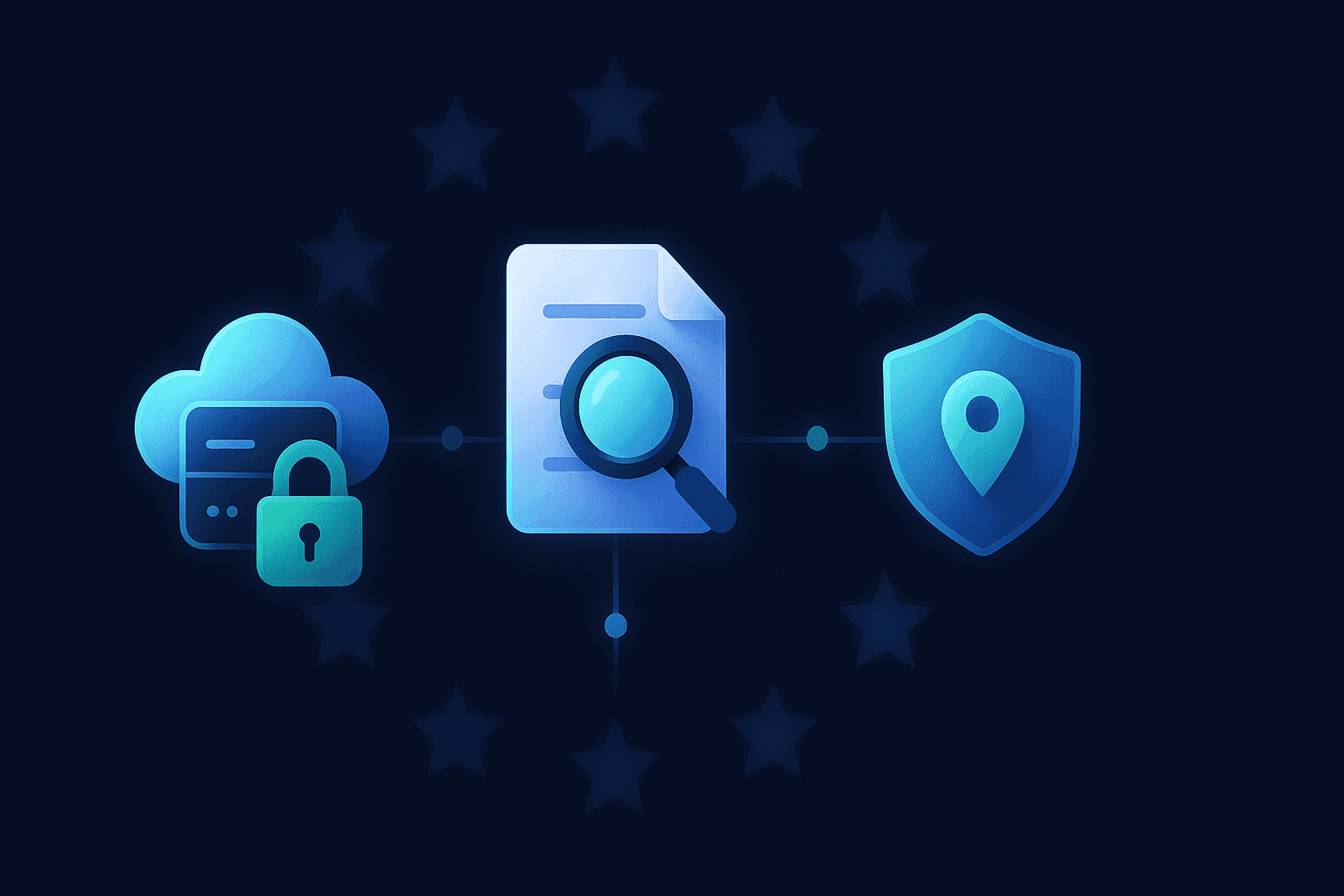
Practical steps to make your agentic workflows EU-compliant: residency choices, DPIA checklist, provenance, and access controls.

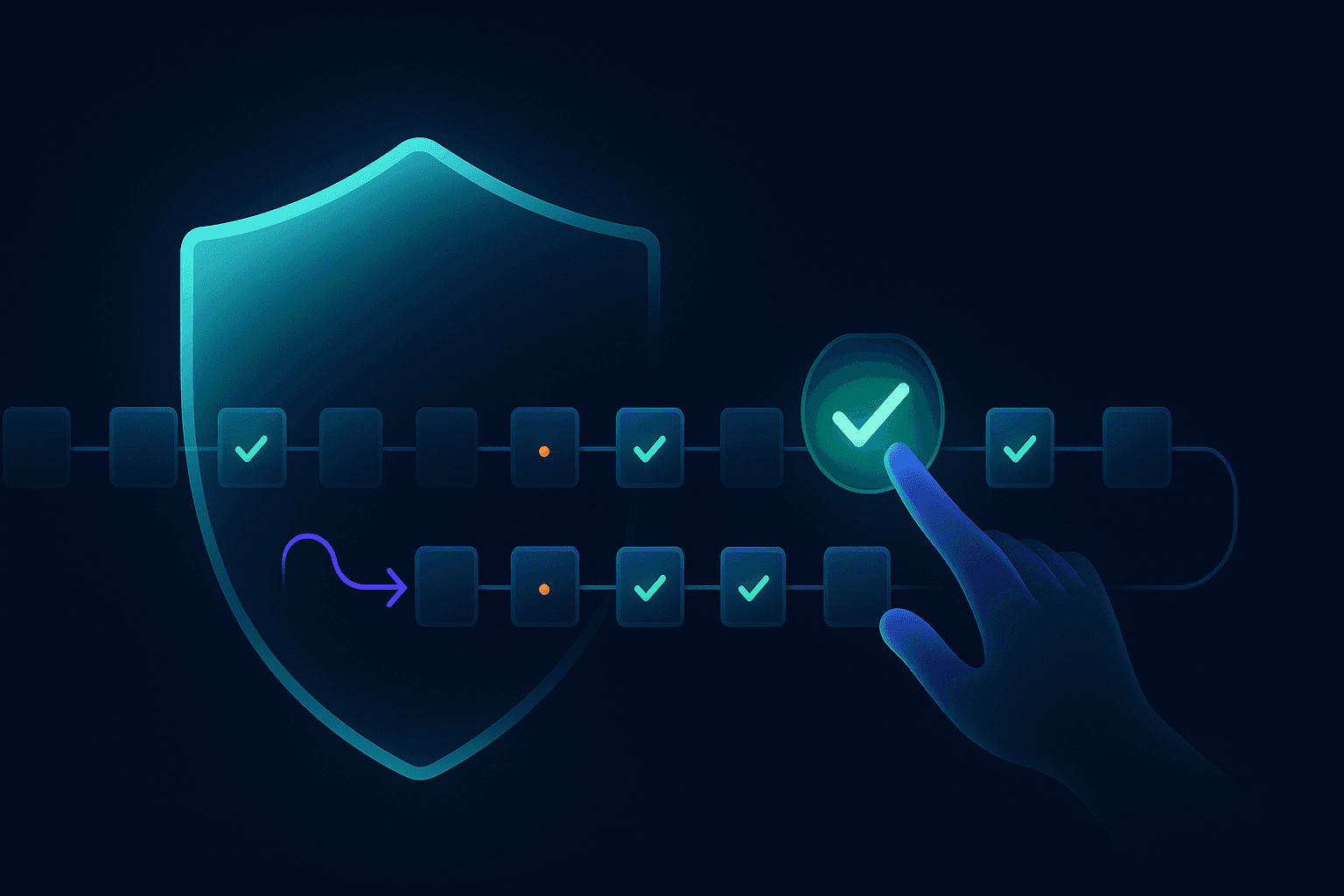
A pragmatic recipe to keep agents predictable: small-scope steps, eval gates, rollback, and change control.

When to route, how to set quality thresholds, and a tiny evaluator you can copy to avoid surprises.

A step-by-step blueprint to ship a safe FNOLβtriage loop without big-bang MLβthen layer models for impact.

Vector search β memory. How typed events, approvals, and insights form a durable business memory that improves over time.

Discover how to measure the true business impact of agentic AI beyond simple cost reduction. This article presents a comprehensive framework for evaluating AI ROI across operational excellence, revenue enhancement, strategic agility, employee impact, and innovation acceleration.

Learn how to evolve from tactical AI experiments to strategic business transformation. This article outlines a maturity model for agentic AI adoption and provides a roadmap for building a comprehensive AI strategy aligned with business objectives.

Explore the critical security and ethical considerations for implementing agentic AI in your organization. This article examines unique challenges of autonomous systems and provides a framework for responsible AI deployment that balances innovation with protection.

Discover how agentic AI is transforming customer service while maintaining the essential human element. This article explores how autonomous AI agents can handle routine inquiries, provide personalized support, and seamlessly collaborate with human agents for complex issues.

Explore how multi-agent systems are revolutionizing business operations in 2025. This article examines the shift from single-agent to collaborative AI architectures and how businesses across industries are leveraging these systems for competitive advantage.

A practical operating model for founders using supervised AI agents across research, enrichment, CRM, email, meetings, and follow-upβwithout outsourcing customer learning or relationship judgment.

Discover how goal-driven AI agents that autonomously plan and execute tasks under human oversight can help founders reclaim their time. This article explores strategies for integrating AI into daily operations, freeing up time for strategic decision-making and growth.

Explore how startups can use AI-powered agents to scale their sales efforts efficiently, even with limited resources. This article offers practical tips on leveraging AI to drive growth, optimize sales funnels, and outperform competitors.